
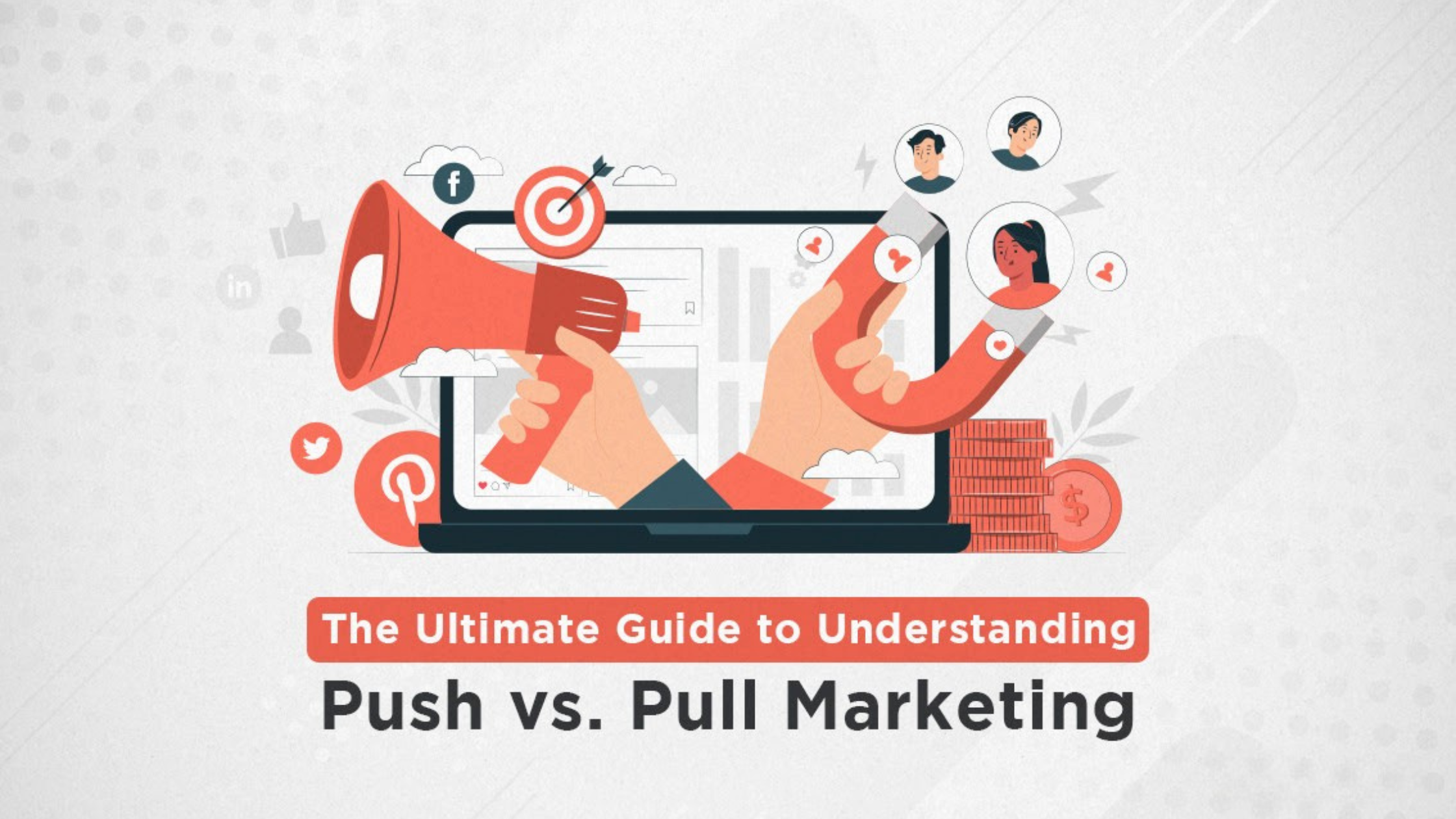
Push and Pull Marketing: Strategies, Differences, and When to Use Each
Understanding the fundamentals of marketing is critical in today’s fast-paced, highly competitive business environment for building brand visibility and driving sales. Of all of the many strategies utilized worldwide, push marketing and pull marketing are two effective and widely employed approaches that work. Both aim to attract customers while increasing revenue; however, their methods, channels, and goals differ – they each serve different stages in customer journey.
Knowing when and how to “push” and “pull” customers towards you can significantly increase the effectiveness of your marketing. This article covers both strategies in detail, highlighting their core differences and explaining how businesses can utilize both for maximum effect.
What Is Push Marketing?
Push marketing (sometimes known as outbound marketing) entails actively placing products or services directly in front of potential customers in an attempt to create demand by placing your offerings directly in their path, whether or not they have actively searched for them.
This strategy is often utilized by companies for new products, seasonal promotions or when seeking immediate visibility. It focuses on fast results, rapid outreach and direct communication.
Push Marketing (also referred to as push promotion) consists of certain characteristics:
- Marketer establishes communication channel.
- Targeting a broad or semi-targeted audience
- Focus on short-term results
- Ideal for brand visibility, launches, and promotions
Common Push Marketing Tactics
- Display ads can be generated via cold calling or emailing, social media ads, influencer shout-outs and TV, radio and newspaper advertising.
- Promotions that target in-store promotions, trade shows and direct selling are key strategies for growth.
Push marketing can be especially effective for businesses looking to quickly increase sales, launch a new service or raise awareness in competitive markets.
What Is Pull Marketing?
Pull marketing (inbound marketing) entails creating value, trust, and interest among your target customers without forcing messages down their throats; rather than pushing out marketing assets that compel customers towards your brand at first, pull marketing draws customers in gradually over time.
This strategy is focused on building long-term customer relationships, positioning your business as the go-to option and encouraging potential clients to seek it out
Pull Marketing Has Some Attributes that Set It Apart
- Customer initiates interest.
- Target highly relevant audiences with intent.
- Long-term strategy focused on loyalty and trust
- Brand Authority and Organic Reach Building
Common Pull Marketing Tactics
Search engine optimization (SEO) can improve a site’s rankings on search engines such as Google and Bing.
Content marketing (blogs, guides, videos)
Social media engagement, email newsletters, public relations activities, storytelling and brand building all form part of an integrated brand building plan.
Word-of-mouth referrals
Pull marketing works best when businesses want to build long-term customer relationships, boost brand credibility, and reduce advertising costs over time.
Key Differences Between Push and Pull Marketing
Push and pull marketing take two very different approaches to attracting customers, and understanding these differences helps businesses choose the right strategy at the right time.
1. Approach and Strategy
Push Marketing : A proactive marketing technique in which brands promote products directly to consumers.
Pull Marketing: An approach focused on providing value that attracts customers naturally through content, trust and brand appeal.
2. Customer Intent
Push Marketing: Provide your product to those who may not actively be searching for it.
Pull Marketing: Engaging customers who have shown an interest or are actively searching for information.
3. Communication Style
Push Marketing: Direct, promotional and focused on quick conversion.
Pull Marketing: Educational, informative and focused on building relationships.
4. Timeframe
Push Marketing: Focusing on fast and short-term results.
Pull Marketing: Provides results gradually over time and provides long-term growth potential.
5. Cost & Investment
Push Marketing: Higher initial costs associated with advertising or promotions may necessitate additional financial commitment.
Pull Marketing: Reduce long-term costs (SEO, content creation and organic reach).
6. Main goal
Push Marketing: Create immediate demand and generate quick sales.
Pull Marketing: Build loyalty, trust, and long-term interest among stakeholders.
7. Best Use Cases
Push Marketing: Product launches, seasonal promotions and brand awareness.
Pull Marketing: Brand building, nurturing warm leads and expanding organic reach are essential elements of success in today’s environment.
Examples of Push vs. Pull Marketing
To make the differences easier to understand, here are practical examples:
Push Example 1:
A pest control company runs Facebook and Google ads offering “50% Off Cockroach Treatment near Edensor Park”. This reaches homeowners who may not necessarily be searching for them directly but may still be intrigued.
Pull Example 1:
The same company publishes SEO blogs such as “How to Stop German Cockroaches Naturally,” which attracts online search users looking for solutions.
Push Example 2:
At a retail store, banners were posted promoting an upcoming weekend sale.
Pull Example 2:
Customers follow this store on Instagram because they love its daily fashion tips.
Pros and Cons of Push and Pull Marketing
Understanding the strengths and limitations of push vs. pull marketing can help businesses create well-balanced strategies that provide both immediate impact and long-term growth. Each approach brings its own set of benefits; however, their limitations must also be taken into consideration before selecting one for implementation based on goals, budget and customer behavior.
Pros of Push Marketing:
- Push Marketing provides fast visibility and results.
- Product launches and promotional campaigns make the perfect use for this tool.
- Businesses want to stand out in competitive markets, so we help businesses stand out with solutions that distinguish their business from its competition.
- Provides clear, measurable outcomes
Cons of Push Marketing:
- Can be expensive due to constant advertising.
- Customers may perceive you as overly promotional.
- Results often require ongoing costs in order to see lasting improvement, and can often only provide temporary results.
Pros of Pull Marketing:
- Builds trust, credibility and long-term customer relationships
- Attract high-intent leads with qualified prospects.
- Over time, more cost-effective with strong ROI.
- Strengthen brand authority and organic reach
Cons of Pull Marketing:
- Pull marketing requires time, consistency and ongoing content production to be effective.
- Quick sales or urgent campaigns do not suit this product.
- Relies on SEO, branding and sustained engagement for long term engagement success
By understanding both strategies’ strengths and weaknesses, businesses can combine both tactics into an effective, balanced marketing plan.
Push vs. Pull Marketing: Which One Should You Choose?
Choosing between push and pull marketing is ultimately determined by your business goals, budget and desired speed of results. Push marketing works best when immediate visibility or fast sales are desired or when advertising a new product or limited-time offer. Marketing push can quickly reach a broad audience and spur immediate demand, but pull marketing is more suitable for long-term growth, building trust with potential customers who genuinely require your product or service. Organic reach, brand loyalty and sustained engagement are the cornerstones of successful engagement strategies. Push strategies provide quick traction while pull strategies build long-term customer relations and support for your brand.
Best Approach: Use Both Together
The most successful businesses combine push and pull marketing for maximum impact.
How They Work Together
- Push creates awareness
- Pull creates demand
- Push drives conversions
- Pull builds loyalty
A combined strategy ensures your brand stays visible, reliable, and preferred by your customers.
Conclusion
Push and pull marketing are complementary strategies that work in concert to drive business expansion in their own unique ways. Push marketing allows brands to quickly reach their audience with high visibility and immediate results, while pull marketing draws customers naturally through providing value, trust, and long-term engagement with products or services.
Businesses seeking optimal results should combine push tactics for rapid traction with pull tactics for sustained success, employing both strategies intelligently and using push/pull tactics simultaneously. When used effectively, this combination can significantly enhance brand recognition, customer loyalty and overall profitability.